Discover the ultimate guide to traditional Sri Lankan breakfast favorites.
Daniel Carter
Travel Writer
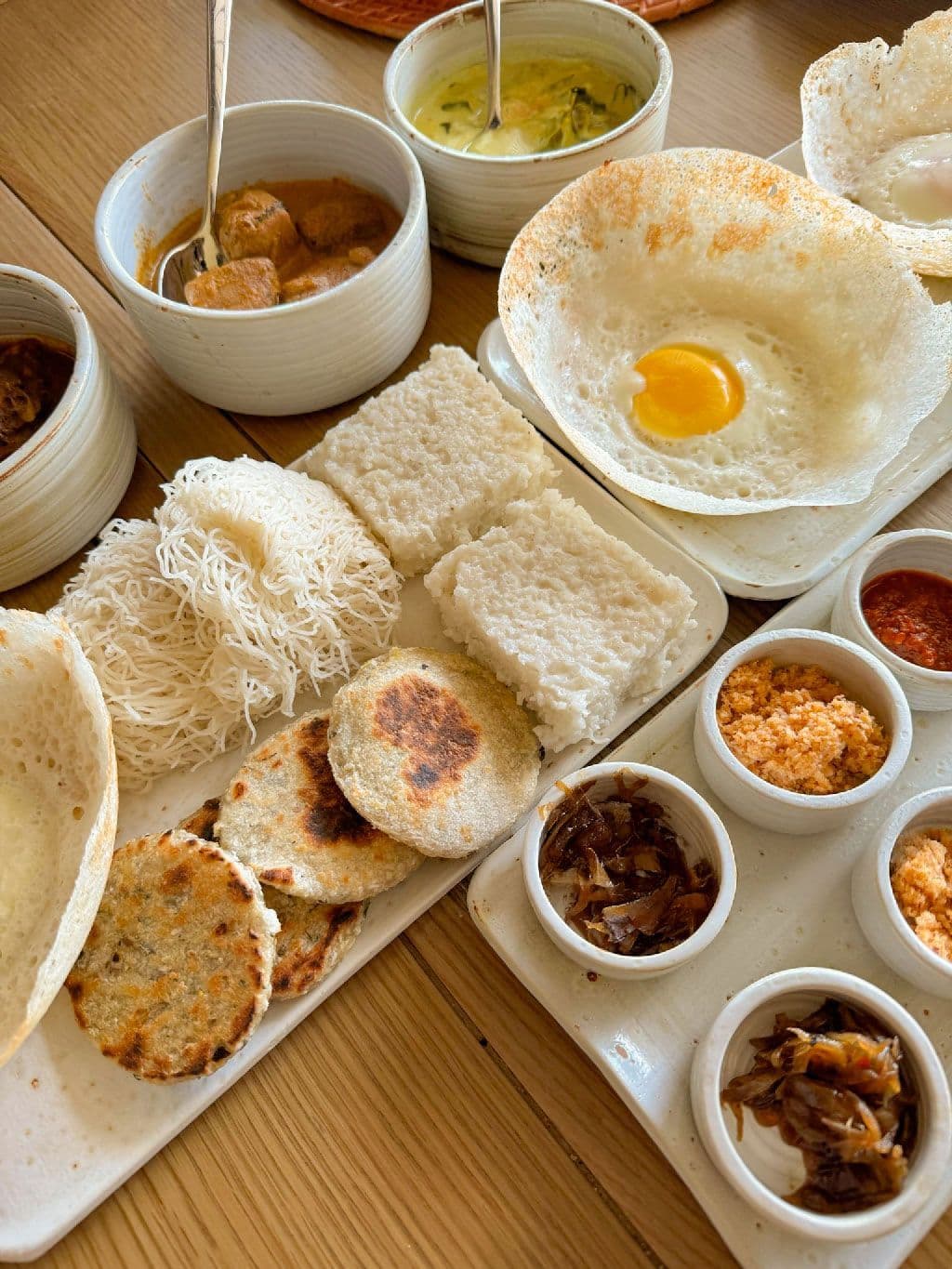
In most parts of the world, breakfast is a quiet affair: toast, cereal, or maybe a croissant. In Sri Lanka, breakfast is an explosion of flavor. It is often the biggest and most exciting meal of the day. When you walk into the breakfast buffet at a Bentota hotel or sit down at a local restaurant, you will see clay pots filled with strange-looking noodles, bowl-shaped pancakes, and bright orange powders. It can be intimidating if you don't know what they are. Do you eat it with a spoon? Is it spicy? Is it sweet? Here is your ultimate guide to the "Holy Trinity" of Sri Lankan breakfast, so you can order with confidence.
Hoppers (Appa): The "Bowl" Pancake
If you only try one thing, make it the Hopper. It is made from a fermented batter of rice flour and coconut milk, swirled in a small wok to create a bowl shape.
- The Texture: Crispy and wafer-thin on the edges, soft and spongy in the bottom center.
- The Varieties: You can get a "Plain Hopper" or an "Egg Hopper," where a whole egg is cracked into the center and steamed. The Egg Hopper is considered the ultimate breakfast treat.
- How to Eat It: Use your hands! Break off the crispy edge, scoop up the soft center, and dip it into Lunu Miris (Onion Chili Paste) or Seeni Sambol (Sweet Onion Relish).

String Hoppers (Indi Appa): The Steamed Nests
These look like noodles, but they aren't pasta. String Hoppers are made by pressing rice flour dough through a sieve to create little circular "mats," which are then steamed.
- The Texture: Soft, light, and fluffy. They are much lighter than bread or rice.
- The Perfect Combo: You never eat them dry. You must flood them with Kiri Hodi (a yellow, non-spicy Coconut Milk Gravy) until they are soggy. Then, you top it with Pol Sambol (Coconut Sambol) for a bit of spice.
- Health Tip: Many wellness centers make these with Red Rice Flour, which is lower in sugar and better for digestion than the white version.

Pol Roti (Coconut Flatbread): The Rustic Heavyweight
"Pol" means Coconut. This is a thick, rustic flatbread made from wheat flour and scraped fresh coconut.
- The Texture: Dense, chewy, and very filling. You can usually only eat two or three. It has a wonderful crunchy texture from the pieces of coconut inside the dough.
- The Perfect Combo: It is tough enough to scoop up thick curries. It goes perfectly with Dhal (Lentil Curry) or a spicy fish curry.
- Fun Variation: Try it with butter and jam! The coconut flavor actually pairs amazingly with sweet toppings if you can't handle the spice.

The Essential Sides (The Sambols)
A Sri Lankan breakfast is nothing without the condiments. You will see these three bowls everywhere:
Pol Sambol (Orange): Fresh coconut, chili, lime, and salt. It is fresh and zesty.
Lunu Miris (Red): Onion, chili powder, and dried fish pounded into a paste. Warning: It is very spicy!
Seeni Sambol (Dark Brown): Caramelized onions with sugar and spices. It tastes like a sweet onion jam. It is delicious with Egg Hoppers.
What About Milk Rice (Kiribath)?
You might also see diamond-shaped blocks of sticky white rice. This is Kiribath (Milk Rice). It is rice cooked in thick coconut cream until it becomes like a cake. It is a ceremonial food, often eaten on the first day of the month or for celebrations. It is very rich and creamy, almost like an unsweetened rice pudding.
Skip the Toast
At authentic local hotels, they believe breakfast should fuel you for the day. While most places serve toast and eggs, we highly recommend trying the local options. So go ahead, skip the continental breakfast. Order the Hopper. Your taste buds will thank you.
Enjoyed this story? Share it
About the Author
Daniel Carter
A passionate coastal explorer and travel storyteller dedicated to uncovering the tropical secrets, tranquil mangrove forests, golden sun-drenched beaches, and the rich architectural heritage of Bentota — the premier coastal escape of Sri Lanka's southern coast.